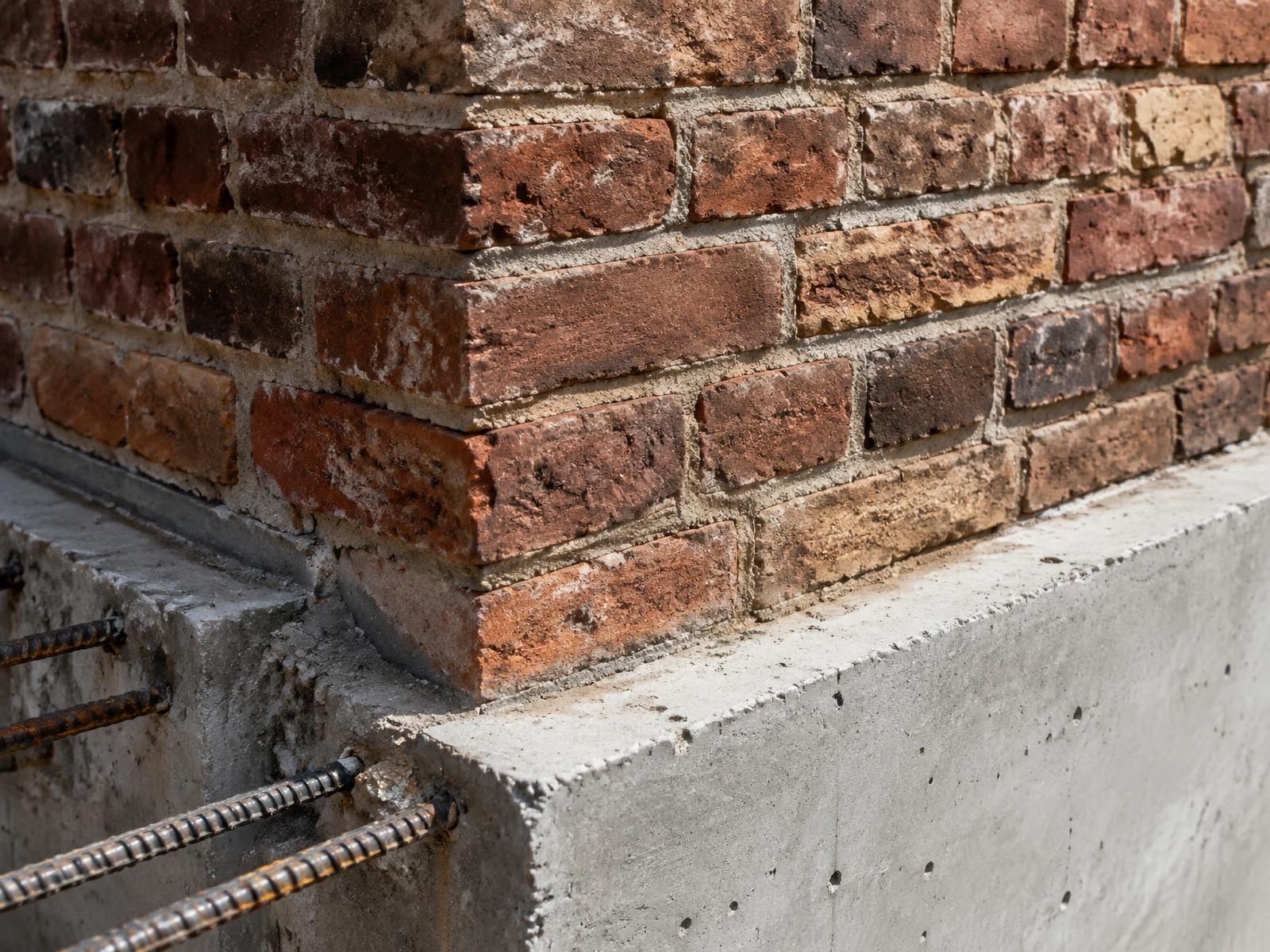
Why foundation problems are common in Amsterdam
Much of Amsterdam's older housing stands on timber piles in soft peat and clay. Wood that stays below groundwater lasts a long time. If groundwater drops or the pile heads dry out, fungal decay can develop. Bacterial decay under water and insufficient bearing capacity of the original piles can also play a role.
Buildings differ greatly: age, pile length, loads, later alterations and the condition of neighbouring buildings in the same block all matter. A building's age alone says nothing definitive about its foundation.
Signs that may point to a foundation problem
These signs are often mentioned in connection with foundation problems. They can also have other causes, such as shrinkage, temperature movement, renovations or timber moving.
- Stepped or diagonal cracks in brickwork, especially around frames and corners
- Cracks that widen or return after repair
- Doors and windows that start sticking (again) or no longer close properly
- Noticeably sloping floors or a visibly leaning façade
- Gaps between floor, skirting or stairs and the wall
- A height difference relative to neighbouring buildings or a separated joint
Cracks in walls: when is it the foundation?
Hairline cracks in plaster are usually cosmetic. Cracks running through the brickwork, rising diagonally towards a corner or widening over months deserve more attention. Change over time is often more informative than width at one moment.
A simple way to track it: mark two pencil lines with a date beside a crack and measure periodically, or photograph from the same spot with a ruler in view. This does not replace an engineer's measurement, but it helps a first conversation.
A sinking house: what you can do
If you suspect subsidence, these are sensible first steps:
- Collect existing information: drawings, earlier foundation reports, owners' association documents or municipal records
- Ask neighbours whether they see similar signs; buildings in one block often share foundations
- Record observations with dates and photos
- Have a foundation investigation carried out by an independent, qualified party
- Only then request a targeted quote for restoration
What we can and cannot say
We cannot determine a cause remotely or judge the condition of your piles. We can talk through your situation and existing reports and explain the usual next steps. You can calculate a preliminary cost estimate yourself; it is explicitly not a quote.
Acutely unsafe?
Sudden large cracks, cracking sounds, falling bricks or doors jamming within a short time? Leave the unsafe part of the building and contact the municipality or, in immediate danger, 112.